


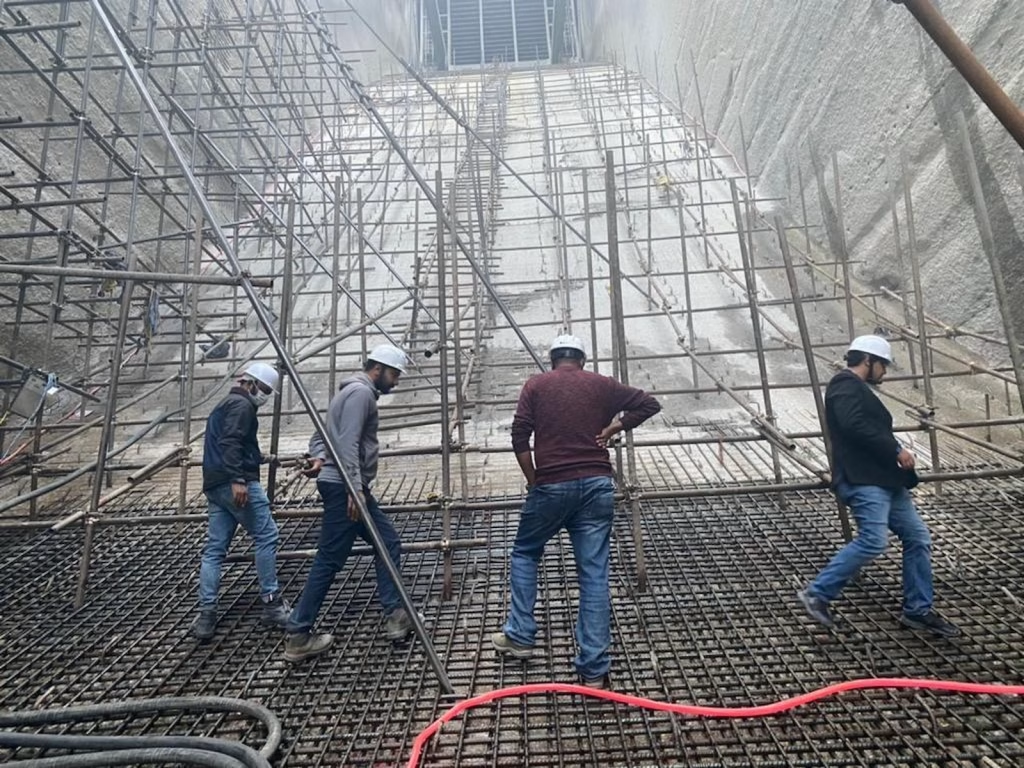
VENUS was established in 1996 with an aim of undertaking a range of business in quality solutions to construction problems. Since its establishment, it has been able to establish its brand in providing seepage control solutions, structural strengthening, repair, maintenance & rehabilitating, retrofitting various engineering structures such as buildings, water reservoir/tanks, dams, bridges, culverts, and so on.
Years in Business
Delivered projects
Product SKUs Distributed Nationwide
Projects Powered by Our Supplied Products
Our curated range of specialized construction chemicals and solutions plays a vital role in Nepal’s hydropower development. From high-performance concrete admixtures to waterproofing and structural repair systems, the products supplied by Venus Trade Concern are engineered to meet the demanding standards of large-scale hydro projects. Explore how our offerings are supporting the nation’s energy future.
Chairman & Managing Director
It is my pleasure to introduce you to Venus Construction Pvt. Ltd., one of the leading companies working in the field of construction, chemicals, and waterproofing material in Nepal. To begin with, I would like to express my heartfelt gratitude to our respected customers, financers & bankers and appreciate the employees who work diligently to deliver the projects successfully. Further, I would also like to thank you all for visiting our profile and learning about our journey. Venus has been a brand name in the field of construction and waterproofing since 1996. The company is known for the quality of job execution with the help of a dedicated workforce supported by the Company’s policy to retain the best talent.
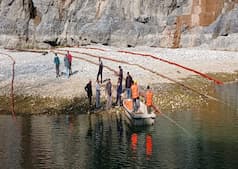
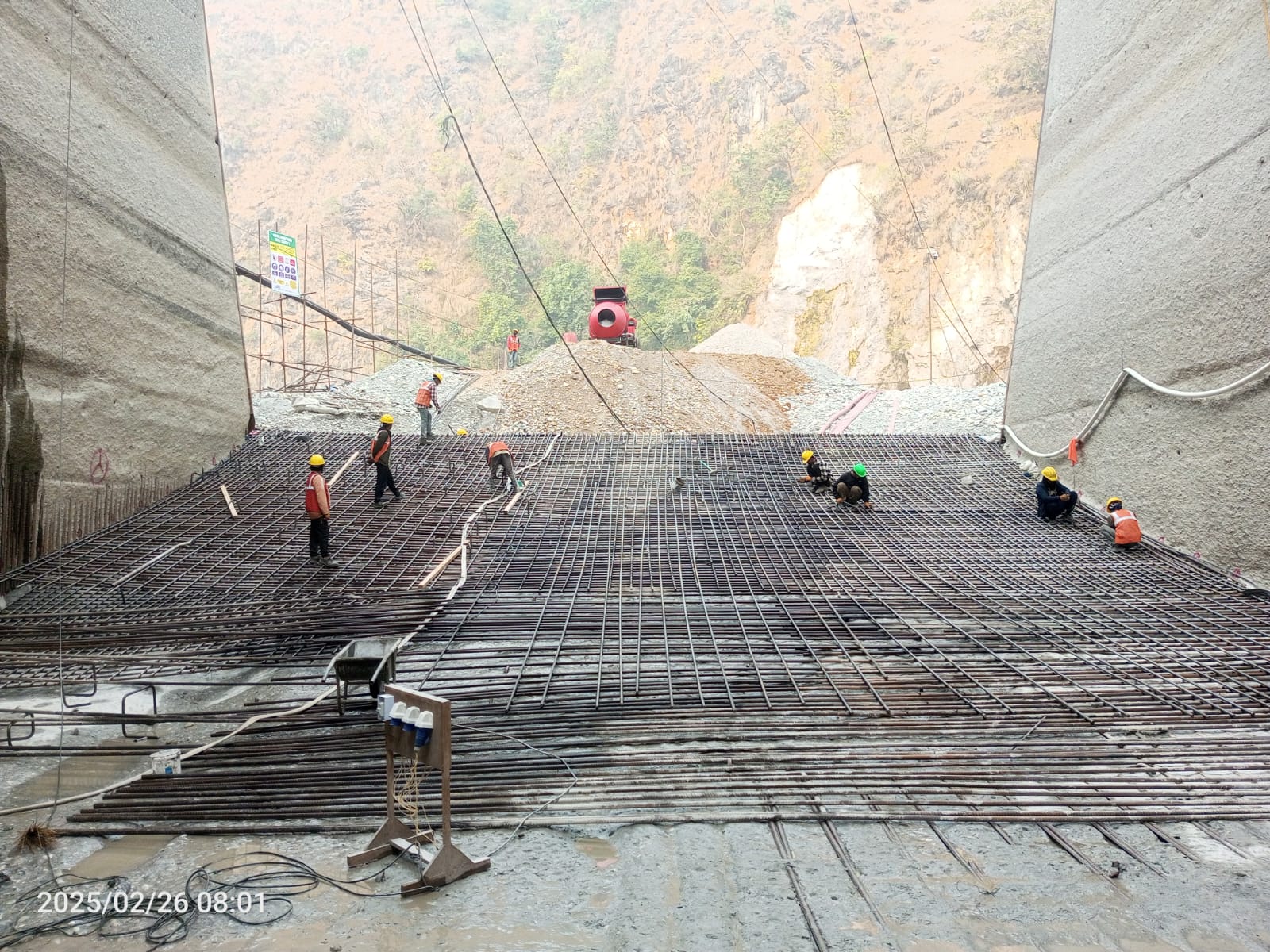
Hydraulic structure repair and rehabilitation involves restoring and strengthening water-related infrastructure such as dams, canals, spillways, and hydropower facilities. Using advanced techniques like grouting, concrete repair, and waterproofing, these services ensure structural integrity, prevent water leakage, and extend the operational life of critical hydraulic systems.
Learn More
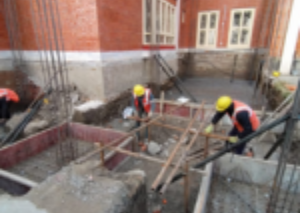
Building construction refers to the process of creating new structures or modifying existing ones on a property. This includes a wide range of projects, from major developments to smaller tasks like bathroom renovations or room additions. Regardless of the project's size, it demands careful consideration of various factors such as design, budgeting, materials, and compliance with legal and regulatory requirements.
Learn More
Rehabilitation and retrofitting improve structural safety through focused upgrades that restore strength and extend service life.
Learn More
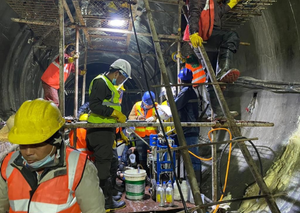
Epoxy and PU injection seal cracks and stop leakage, restoring strength and ensuring long-term durability.
Learn More
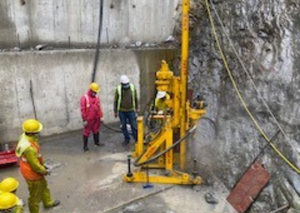
Drilling and micro piling provide deep support, improving stability and load capacity in challenging ground conditions.
Learn More
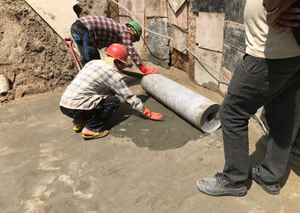
Waterproofing protects structures by limiting water entry. It's stronger than damp proofing. Excess water creates pores, weakening durability.
Learn More
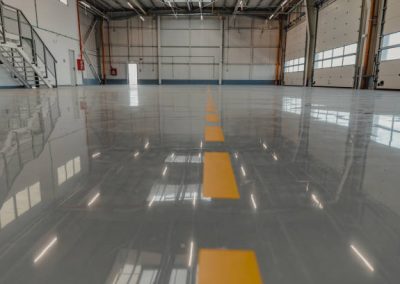
Industrial flooring systems create durable, high-strength surfaces that resist wear and support heavy-duty operations.
Learn More
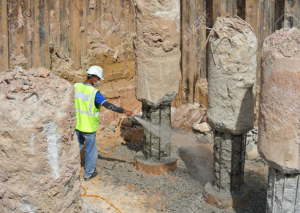
Anti-termite treatment protects structures by creating a chemical barrier that prevents termite attack and ensures long-term safety.
Learn More
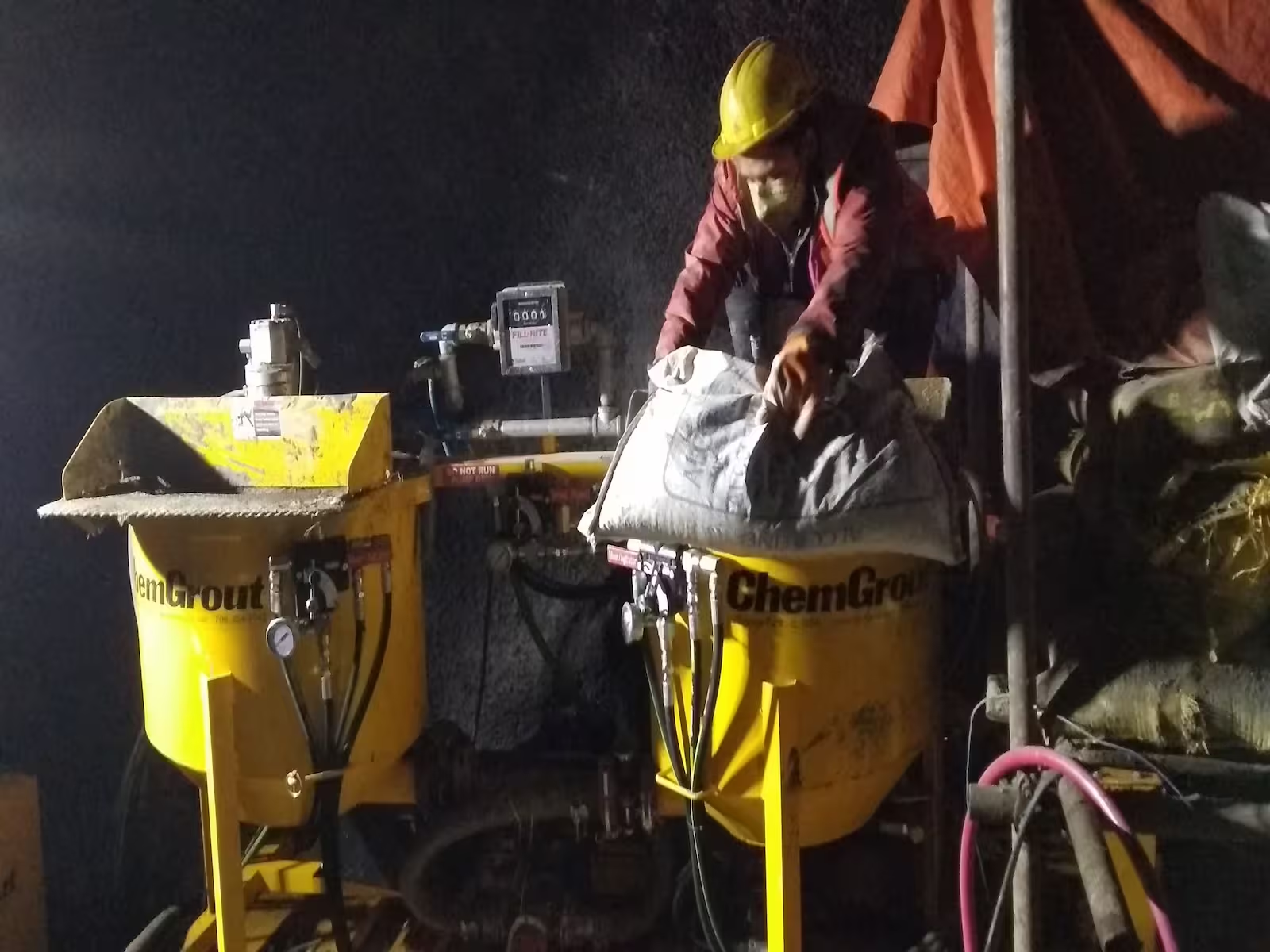
Cement grouting fills voids and strengthens weak zones, improving structural stability and preventing water ingress.
Learn More
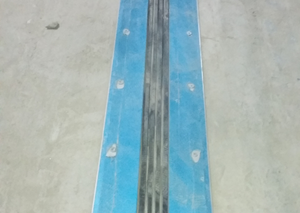
Seismic expansion joint treatment protects structures by allowing controlled movement and preventing cracks during seismic activity.
Learn More
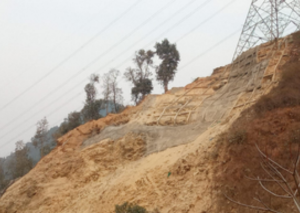
Concrete repair and protection services restore damaged surfaces and prevent future deterioration through specialized treatment systems.
Learn MoreBuilding construction refers to the process of creating new structures or modifying existing ones on a property. This includes a wide range of projects, from major developments to smaller tasks like bathroom renovations or room additions. Regardless of the project's size, it demands careful consideration of various factors such as design, budgeting, materials, and compliance with legal and regulatory requirements.

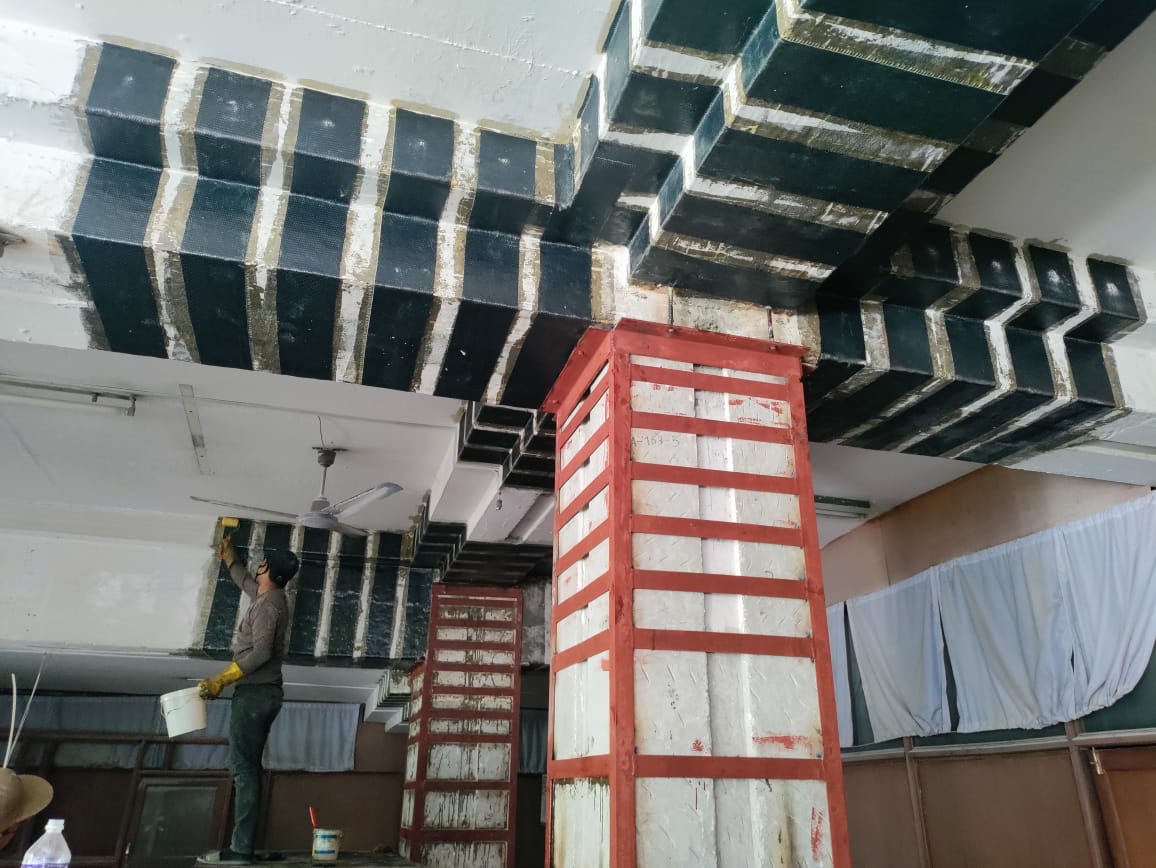
Retrofitting is the process of adding new features to existing buildings, heritage structures, or bridges to enhance safety—particularly against seismic activity—and improve overall performance. It is often applied after the original construction to address evolving safety standards or structural needs. Strengthening, on the other hand, focuses on increasing a structure’s load-carrying capacity to ensure it can perform effectively under existing or increased loads. This may be necessary due to changes in usage, design standards, or deterioration over time.
When repairing cracks in concrete structures from the inside (negative side), two primary injection methods are used: epoxy resin and polyurethane grout. Epoxy injection is best suited for dry cracks and is mainly used for structural repairs, as it bonds the concrete and restores its original strength. In contrast, polyurethane injection is ideal for wet or actively leaking areas, as it effectively seals cracks, blocks moisture infiltration, and protects the structure from water damage and corrosion.
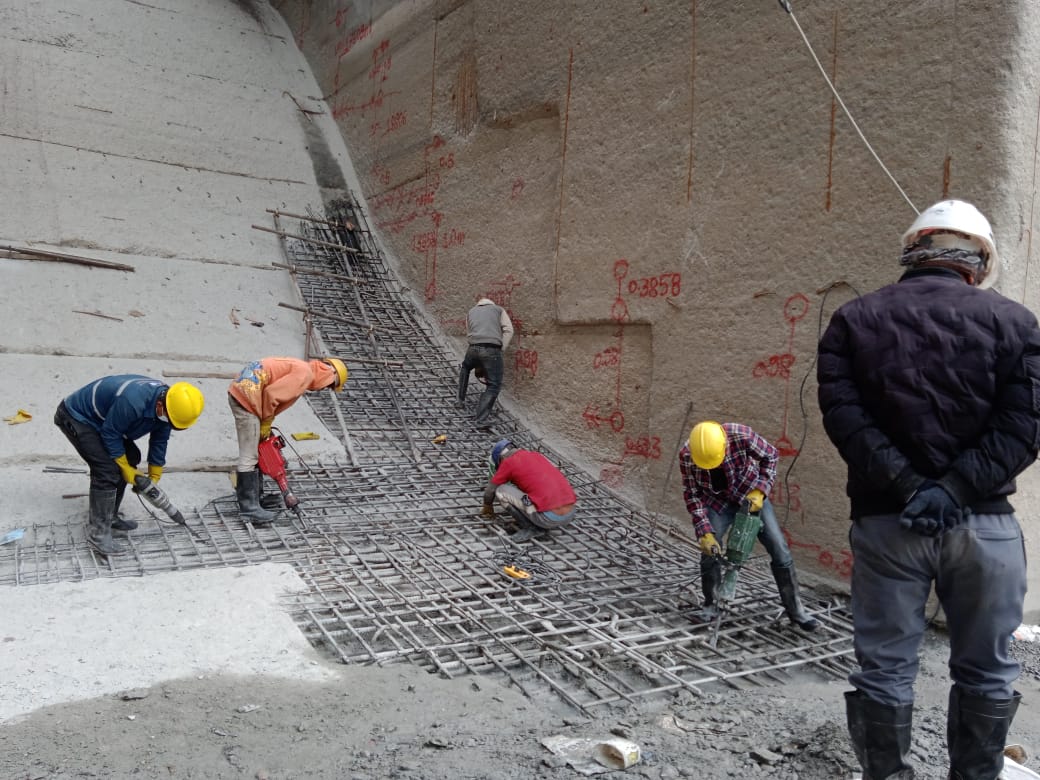
Micropiles, or mini piles, are small-diameter (typically 6 to 12 inches) high-strength foundation elements consisting of steel casing or threaded bars encased in grout. They are ideal for stabilizing structures in confined spaces or areas with low headroom and are often used in retrofit or upgrade projects with minimal disruption to ongoing operations. Installation involves a drilling process in which a high-speed, multi-point rotating drill bit cuts precise circular holes into solid materials, allowing for accurate placement of the micropiles.
Waterproofing is essential in modern construction to reduce water or moisture entry into concrete or masonry, especially in extreme conditions. Though full water exclusion is unlikely, it enhances structural durability. Unlike waterproofing, damp proofing only slows water penetration. Excess water during construction creates pores that lead to water ingress and weaken the structure over time.
Flooring is a crucial element in building design, significantly contributing to the aesthetic appeal, functionality, and overall character of a space. As the most frequently used surface, it acts as the final touchpoint that occupants interact with daily. Beneath its visible layer lies a carefully engineered system of materials designed to ensure durability, stability, and long-lasting performance.
Pre Anti-termite treatment is a preventive chemical process aimed at safeguarding buildings from subterranean termite infestations. It is applied during both pre-construction and post-construction phases to create a protective barrier in vulnerable areas such as soil, masonry, wood, and electrical fixtures. In the pre-construction stage, the treatment is typically applied to the soil beneath and around the foundation to prevent termite entry. For existing structures, post-construction treatment involves drilling and injecting chemicals around the building to strengthen the protective barrier and deter termite activity.
Cement grouting works involve injecting a cementitious mixture into cracks, voids, and weak zones within soil or structural elements to enhance strength and stability. It is used in both new construction and repair projects to improve load-bearing capacity and reduce water seepage. During application, grout is pumped under controlled pressure to fill gaps and bind loose materials, creating a solid and durable mass. In existing structures, grouting helps stabilize foundations, prevent leakage, and restore structural integrity by reinforcing deteriorated areas and reducing settlement risks.
Seismic expansion joints treatment works involve protecting and reinforcing the gaps between structural sections to ensure safe movement during seismic activity. These joints allow buildings to expand, contract, and shift without causing structural damage. The treatment includes installing specialized sealants, covers, and flexible systems that accommodate multi-directional movement while maintaining waterproofing and durability. In existing structures, rehabilitation of seismic joints may involve removing damaged materials, cleaning the joint surfaces, and applying new movement-tolerant systems to restore performance and enhance overall seismic resilience.
Slope protection and soil stabilization works involve strengthening vulnerable ground to prevent erosion, landslides, and structural settlement. These methods are applied in both natural and constructed slopes to enhance long-term safety and stability. Techniques such as retaining structures, shotcrete, rock bolting, geotextiles, and soil nailing are used to reinforce weak soil and control surface runoff. For existing unstable areas, stabilization includes treating loose zones, improving drainage, and adding structural support to reduce movement and restore stability. These measures ensure reliable ground performance and protect nearby infrastructure.
Experienced
Over two decades of trusted expertise in engineering and construction chemicals.
Committed
Dedicated to delivering quality that meets national and international standards.
Innovative
Continuously evolving with advanced materials and modern construction practices.
Reliable
Proven track record across diverse terrains and challenging project conditions.
Over the years, Venus Construction has earned the confidence of engineers, contractors, and institutions through reliable service and proven performance. Our clients' words reflect our commitment to quality, innovation, and long-term partnerships built on results. Here’s what they have to say about working with us.
Venus Construction Pvt. Ltd. is a competent organization with skilled manpower that has been able to deliver all the assigned jobs within the given time strain as per the contract specifications. They have a good team with great teamwork skills while performing the activities. We would be more than happy to recommend them for similar works such as waterproofing. epoxy grouting and scaffolding works.

We are satisfied with the execution of the work carried out by Venus Construction and Waterproofing Pvt. Ltd. and highly recommend them for the similar nature of works and wish them all success in their future endeavors. They have got skilled human resources with ability to deliver the services on time. They have got good skill set at presentation and project management skills while performing the jobs.
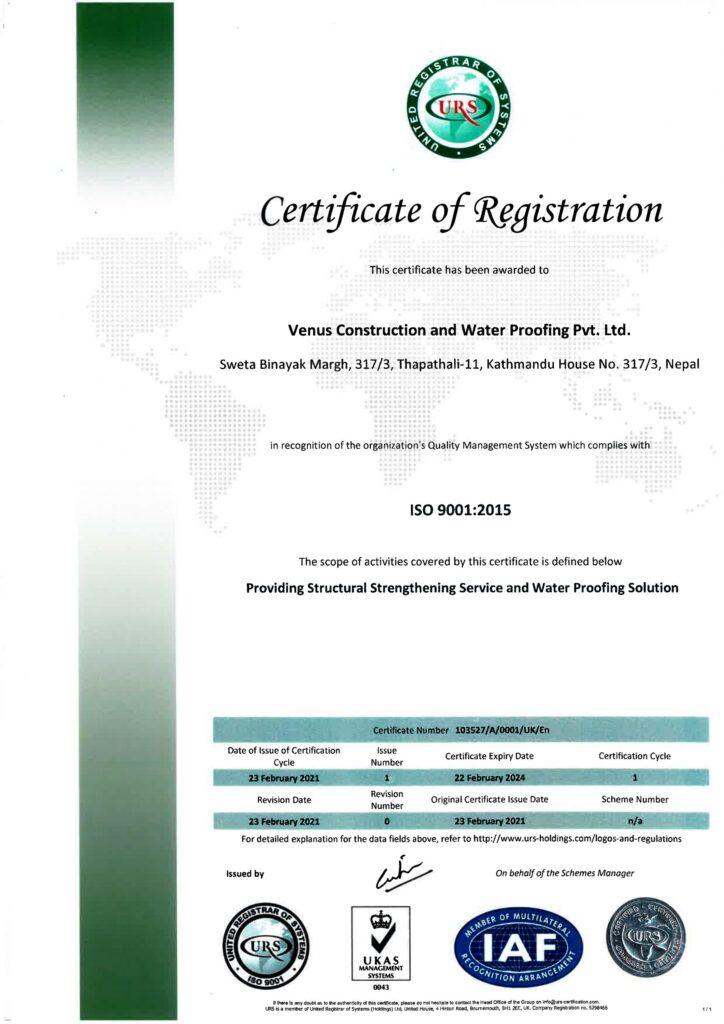
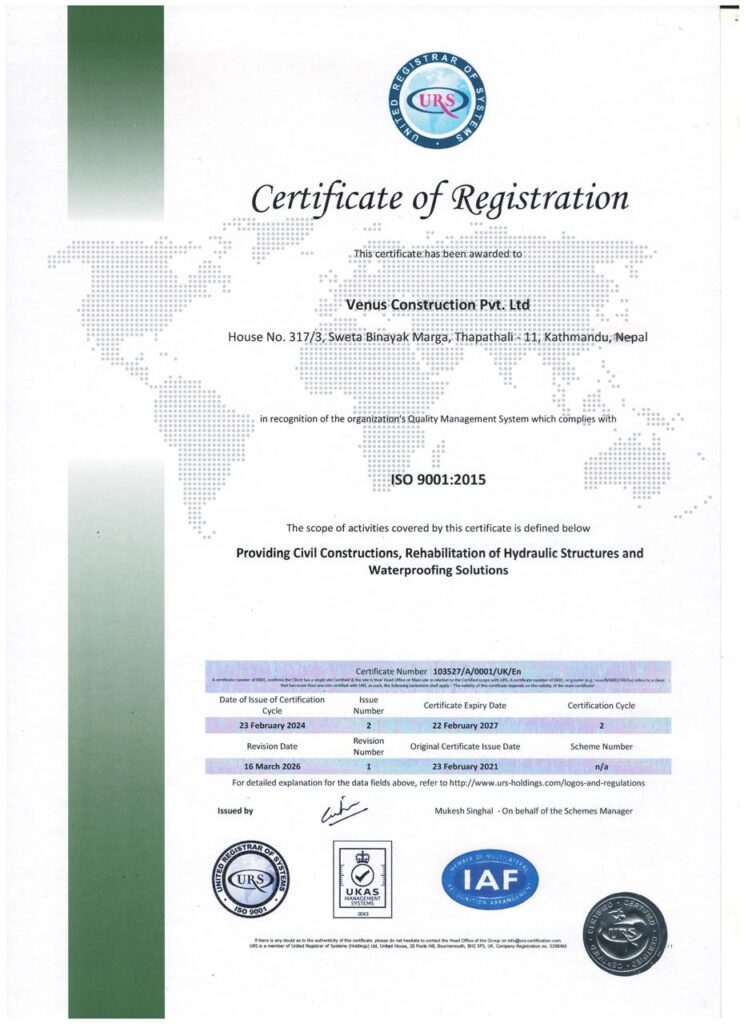
ISO 9001:2015 is an international standard dedicated to Quality Management Systems (QMS). It outlines a framework for improving quality and a vocabulary of understanding for any organization looking to provide products and services that consistently meet the requirements and expectations of customers and other relevant interested parties in the most efficient manner possible. The QMS is the aggregate of all the processes, resources, assets, and cultural values that support the goal of customer satisfaction and organizational efficiency. Venus Construction and Water Proofing Pvt. Ltd. got its ISO 9001:2015 certification on 22nd February 2021. The scope of the activities covered by the certificate was defined as “Providing Structural Strengthening Service and Water Proofing Solutions”.
ISOs fundamental mission is to provide common specifications, terms, standards, and units of measurement to organizations around the world. ISO does not provide certification or conformity assessment. Rather, it facilitates global trade and innovation to allow every organization in every sector from around the world to have a common language and common expectations for everything from technology and manufacturing to food safety, healthcare, and agriculture.


Whether you have a project in mind and you’re looking for a reliable construction partner or you’re looking to take the next step in your career, we want to hear from you!
Corporate Address
P.O BOX: 11878, Thapathali,
Kathmandu, Nepal
For enquiries:
Email: